


Equine Sarcoids
Finding a lump on your horse can be worrying, but not all skin growths are cause for alarm. Sarcoids are the most common skin tumour in horses and, while they don't spread to internal organs, they can grow, become irritated, and sometimes be challenging to treat.
What Causes Sarcoids?
Sarcoids are linked to Bovine Papillomavirus (BPV), which is thought to enter the skin through small wounds. Not every horse exposed to the virus develops sarcoids, suggesting that genetics and the horse's immune system also play a role.
Sarcoids are not considered highly contagious, but flies and contaminated equipment may contribute to the spread of the virus.
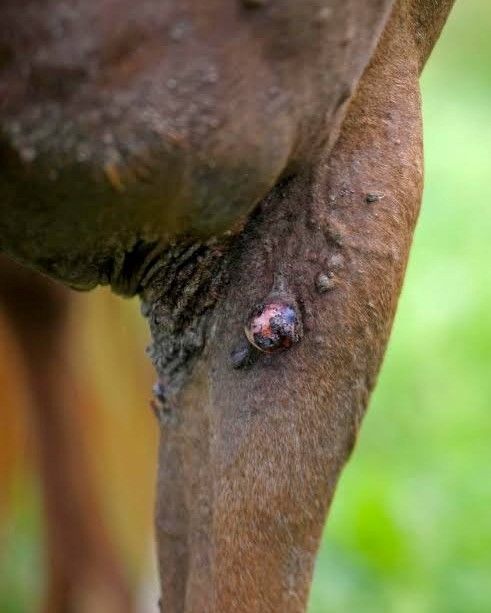
What Do They Look Like?
| Sarcoids can vary in appearance. They may look like:
They are commonly found around the face, chest, belly, groin, and legs. |  |
Do All Sarcoids Need Treatment?
| No. Many small, stable sarcoids that aren't causing discomfort or interfering with tack or movement can simply be monitored. However, treatment is recommended if a sarcoid is:
It's important not to pick, cut, or apply home remedies to a sarcoid, as disturbing it can sometimes make it grow more aggressively. |  |
Treatment Options
There is no single treatment that suits every sarcoid. Depending on its size, location, and type, your veterinarian may recommend:
- Surgical removal
- Cryotherapy (freezing)
- Prescription topical treatments
- Local chemotherapy
Sometimes a combination of treatments offers the best outcome.
When Should You Call Your Vet?
Have any new skin lump assessed, especially if it is growing, bleeding, or changing. Early diagnosis gives the best chance of successful treatment and helps determine whether a sarcoid is best treated, or simply monitored.
If you've noticed a suspicious lump on your horse, contact our clinic on 07 4982 2552. We're happy to assess it and discuss the most appropriate management options for you and your horse.